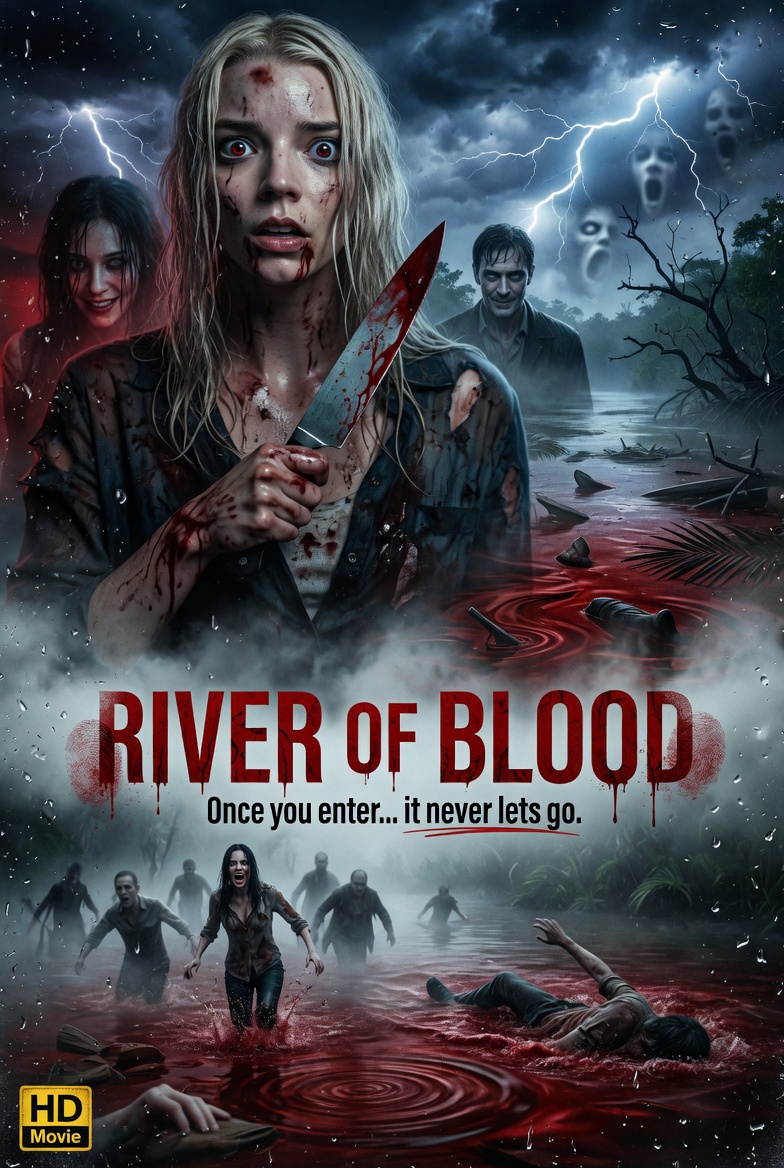
RIVER OF BLOOD
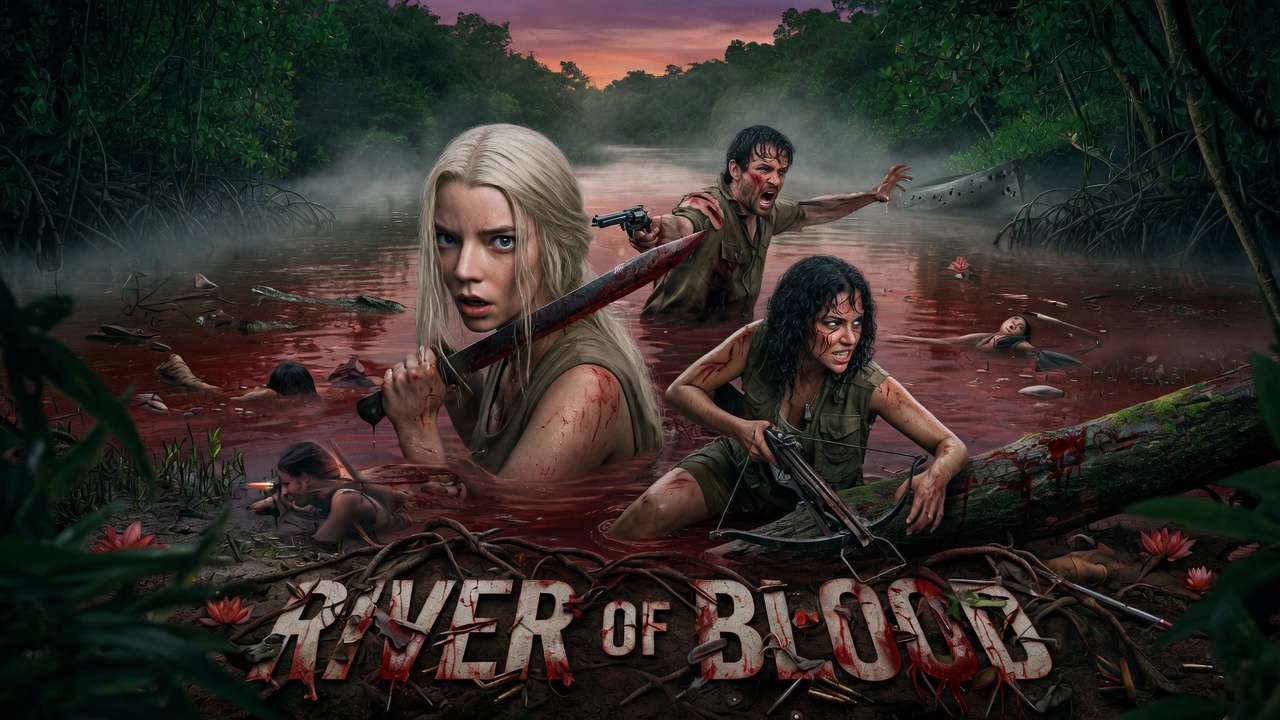
**RIVER OF BLOOD (2026)**
Starring: Anya Taylor-Joy, Joseph Millson, Sarah Alexandra Marks
In **RIVER OF BLOOD**, the past does not stay buried—it flows, silent and patient, waiting for the moment it can rise again. Set in a remote, forgotten region where dense forests choke the horizon and a single river cuts through the land like a wound, the film unfolds as a haunting journey into guilt, memory, and the cost of survival.
Anya Taylor-Joy stars as Elara Voss, a young woman returning to her childhood village after years of self-imposed exile. Officially, she has come back to settle unfinished family matters. Unofficially, she is running—from something she refuses to name, from memories that return in flashes of water, screams, and a night that changed everything. The villager remembers her, but not with warmth. In their eyes, she is both a survivor and a reminder of something they would rather forget.
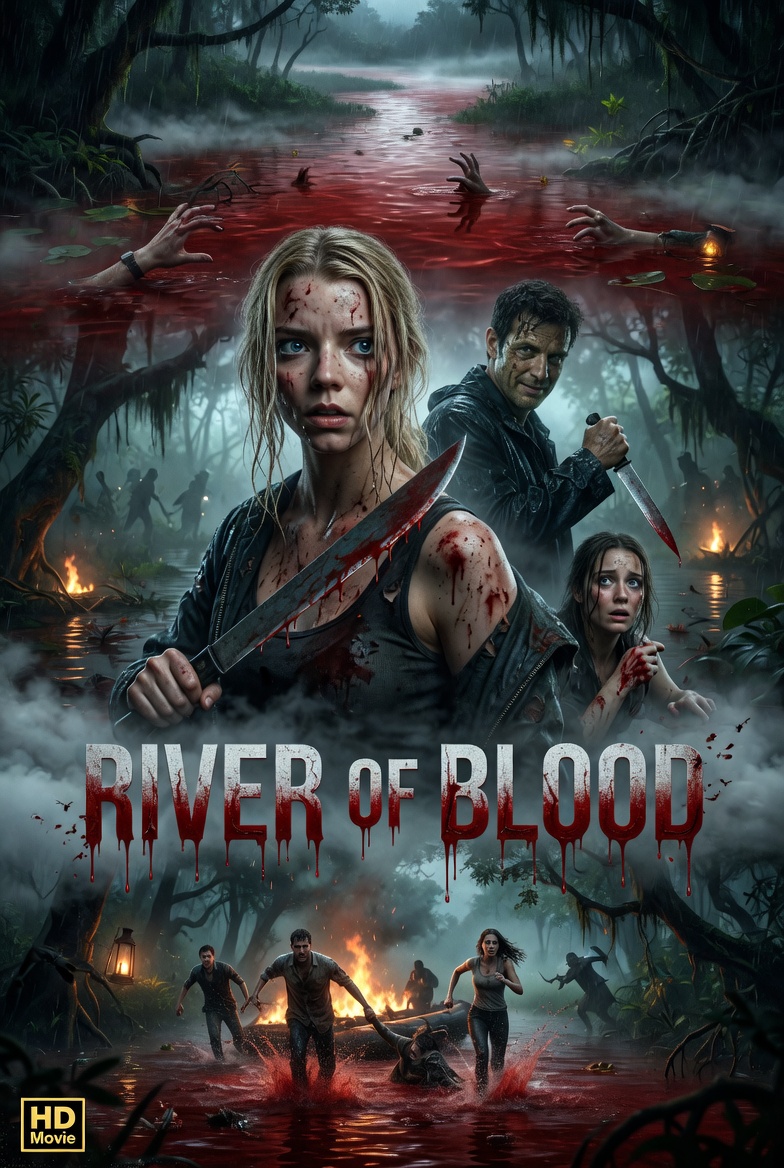
At the heart of the village lies the river. Once a source of life, it has become something darker—its waters thick, slow-moving, and stained by years of whispering tragedies. Locals speak of it in hushed tones, calling it a place where the dead are never truly gone. They say the river takes what it is owed, and when it returns something, it is never the same.
Joseph Millson plays Adrian Hale, a former investigator who has spent years chasing unsolved disappearances tied to this region. Haunted by his own failures, he arrives in the village following a pattern he can no longer ignore. People vanish near the river, their names fade from records, their stories leave incomplete. When he crosses paths with Elara, he feels that her return is not a coincidence—but a key.
Sarah Alexandra Marks portrays Liora, a woman deeply embedded in the village’s traditions, someone who understands the river in ways outsiders cannot. She believes the river is not evil, but ancient—a force that reflects the darkness people carry within themselves. To her, the recent events are not random acts of violence, but consequences of something long set in motion.
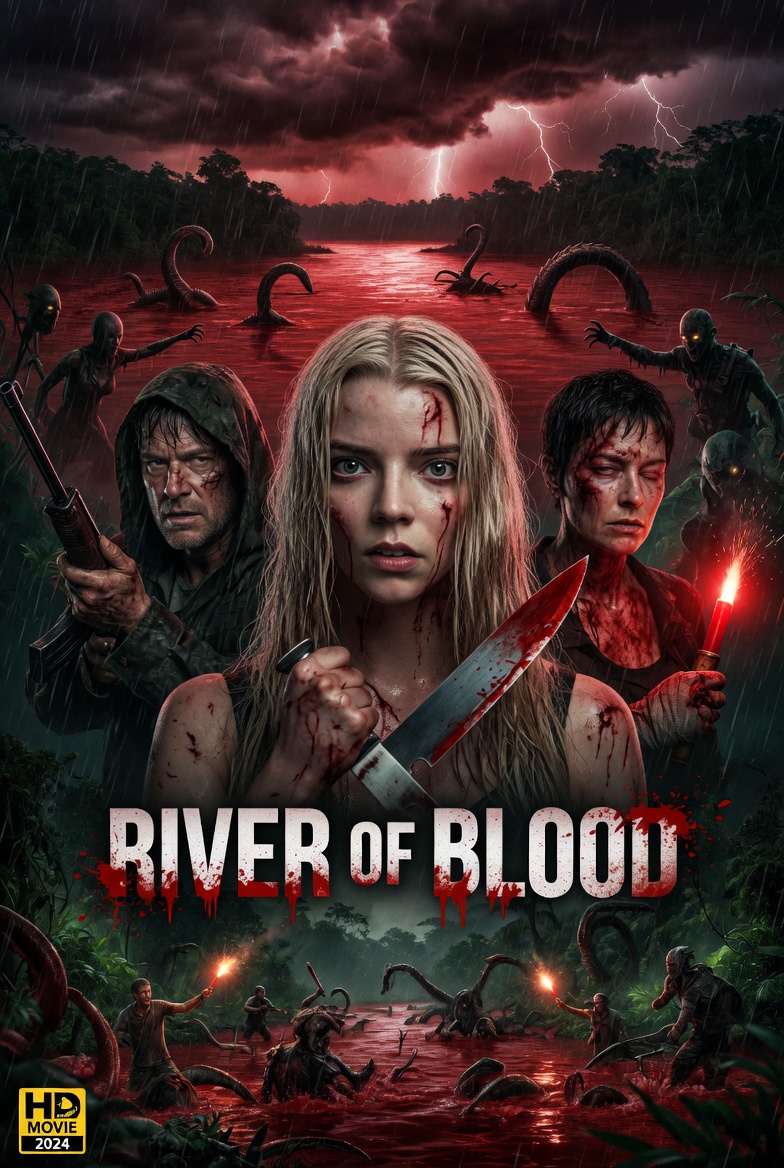
As the story unfolds, layers of truth begin to surface. Elara’s past is slowly revealed—not as a single traumatic event, but as a chain of choices, fears, and silences that allowed something terrible to happen. The night she fled the village is tied to a disappearance that was never solved, a secret the villagers chose to bury rather than confronted.
But the river remembers.
Strange occurrences begin to intensification. Objects thought lost resurface along the riverbanks. Reflections in the water seem to move independently of those who cast them. And at night, the sound of flowing water grows louder, as if the river itself is calling. The line between reality and memory begins to blur, pulling Elara deeper into a confrontation she can no longer avoid.
Adrian’s investigation leads him to a chilling realization: the pattern of disappearances is not random—it is cyclical. Every few years, the river claims someone connected to the original tragedy, as if completing a story that was never properly told. And now, with Elara’s return, the cycle is nearing its final chapter.
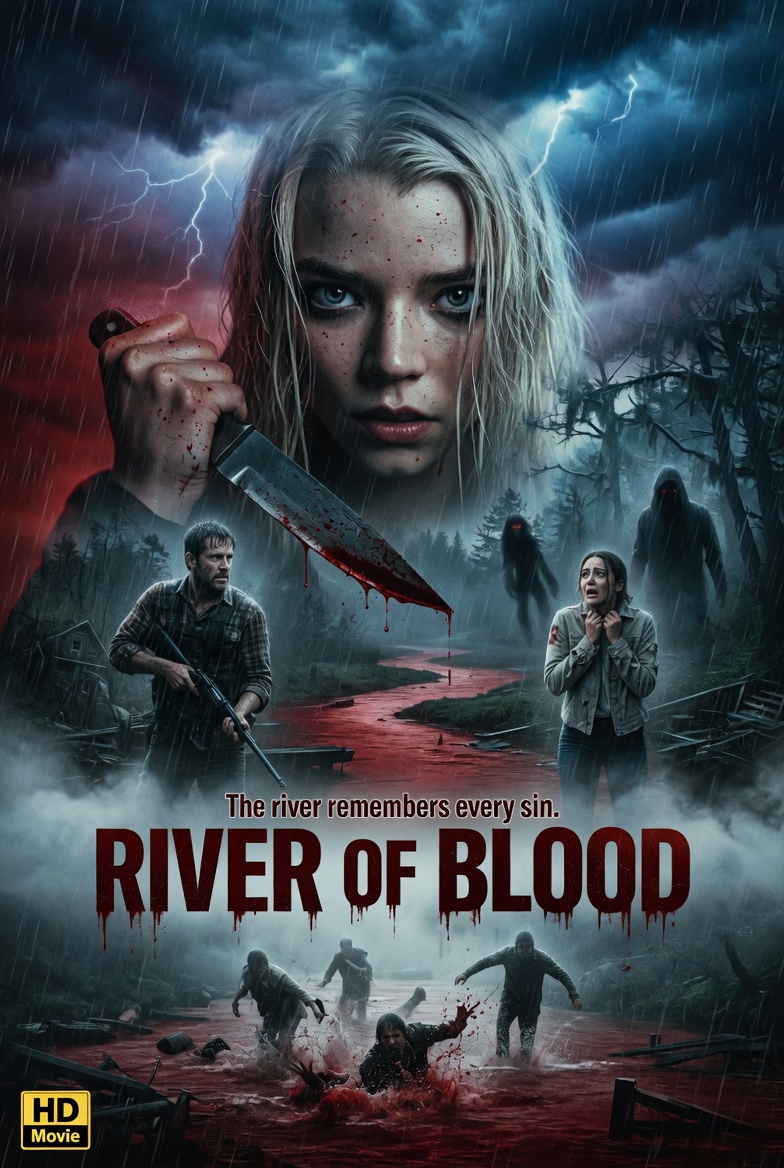
The film builds toward a powerful and emotionally charged climax along the river’s edge, where past and present collide. Elara is forced to face the truth she has spent years denying—that survival came at a cost, and that silence can be as destructive as violence. To break the cycle, she must confront not only what happened, but her role in it.
**RIVER OF BLOOD** is not driven by traditional horror alone, but by the quiet, suffocating weight of unresolved guilt and collective denial. It explores how communities protect themselves through silence, and how the truth, no matter how deeply buried, will always find a way back to the surface.
Visually, the film leans into a muted, atmospheric palette—cold blues, shadowed greens, and the ever-present movement of water creating a sense of unease that never fully lifts. The river itself becomes a character, a mirror, and a judge.
In the end, **RIVER OF BLOOD** asks a haunting question:
What happens when the truth doesn’t disappear… but waits?
**“Some things don’t wash away. They flow… until you face them.”**
Rating: 4.6/5 – A chilling, emotionally resonant psychological thriller that blends haunting visuals with a deeply human story about guilt, memory, and the price of silence.